"Early
Georgian literature was influenced by two
distinctive civilizations—medieval Eastern
Orthodox Christianity and the civilization of
Persia. From the 6th to the 10th cent. the
literature, produced primarily in monasteries,
was ecclesiastical; translations of the Bible
were the principal works.
From the end of the 11th cent. to the early 13th cent., classical old Georgian poetry, secular in nature and strongly influenced by the Persian epic, enjoyed its greatest flowering. The masterpiece of this period was the epic poem by Shota Rustaveli, The Man in the Panther's Skin. Nationalistic in feeling, it is distinguished by a remarkable metrical pattern of fluent rhymes and subtle alliterations. In this same period, the poet Chakrukhadze wrote 20 odes, titled Tamariani, and Ioane Shavteli completed Abdul Messiah." These poems were devoted to Queen Tamar, Queen Regnant of Georgia from 1184 to 1213. Although she was a woman, she is always mentioned in Georgian history as King Tamar. She was the first woman to rule Georgia in her own right. "Georgian
literature." The Columbia
Encyclopedia, Sixth Edition. |
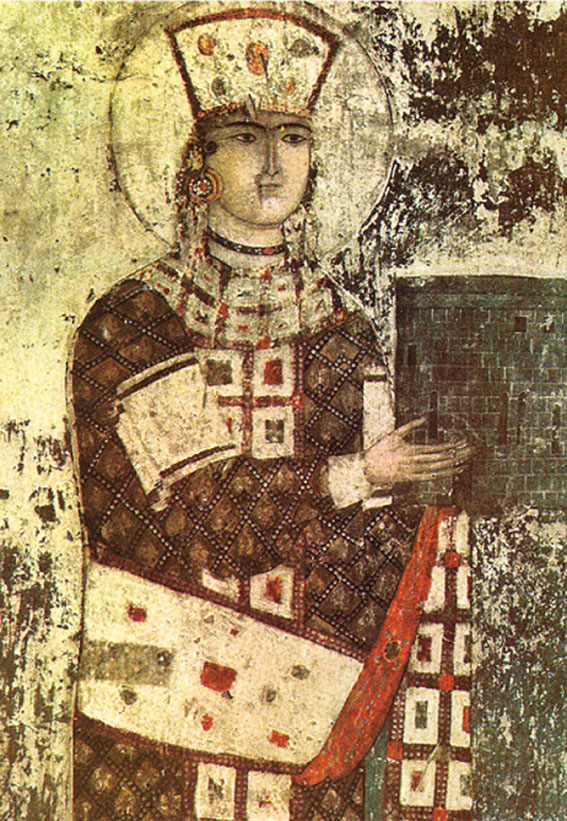 Queen
Tamar Fresco fromVardzia Monastery, 12th
century
|
Inversive
verbs
|
Such important verbs as I have, I want, I love, I like, I hate, I am hungry, etc. will be touched upon in this lesson. When we have learned this group and its characteristic features, the major difficulty of the Georgian verb, and perhaps of the whole Georgian grammar, will have basically been overcome. The shared feature of these verbs in Georgian is that the subject person is presented as an experiencer, receiver or owner of the result, and not as an acting, active subject. Thus,
the Georgian verb indicates how active the
subject role is in the action or state described
by the verb, whether this action (or state)
depends on the will of the subject or whether
the subject is just a passive experiencer,
receiving or perceiving the action or state.
|
2. Inversive (indirect) verbs, these are the verbs expressing emotions and possession:
|
Subject is an acting (or presented as an acting) agent and has the v-series marker on the verb |
Subject is the experiencer or possessor and has the m-series marker on the verb |
|||||||||||||||||||||||||||||||||||||||||||||||||
|
|
| მე მცხელა me m-cxela |
It is hot to me |
| შენ გცხელა shen g-cxela |
It is hot to you |
| მას სცხელა mas s-cxela ბავშვს სცხელა bavshv-s s-cxel-a |
It is hot
to him It is hot to the child |
| ჩვენ გვცხელა chven gv-cxela |
It is hot to us |
| თქვენ გცხელათ tkven g-cxela-t |
It is hot to you |
| მათ სცხელათ mat s-cxela-t ბავშვებს სცხელათ bavshveb-s s-cxela-t |
It is hot
to them It is hot to the children |
|
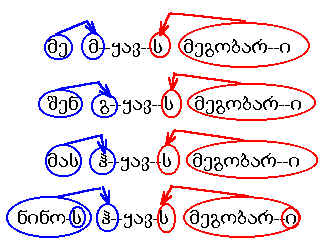
me mq'avs megobari I have a friend. შენ გყავს
მეგობარი მას ჰყავს
მეგობარი ნინოს ჰყავს
მეგობარი |
 |
თინას მოსწავლე
თინა უყვება ნინოს:
ნახე,
ჩემი მოწაფე რა კარგად წერს.
მე
თამრიკო მქვია. მყავს მშობლები, და და ძმა.
დედას ჰქვია ლალი, მამას - ლევანი.
ჩემს ძმას
ზურა ჰქვია, დას - ეკა.
ჩვენ
გვაქვს პატარა სახლი და პატარა ეზო. გვყავს
ქათმები და ძაღლი.
მე მაქვს დიდი ბურთი. ძალიან
მიყვარს ეზოში ბურთით თამაში.
ჩემს ძმას
ჰყავს ველოსიპედი. მას ძალიან უყვარს თავისი
ველოსიპედი.
ჩემს დას
ერთ კვირაში გამოცდა აქვს და მთელი დღე
წიგნებს კითხულობს.
Read the comments
and translation of the text here.
| Exercises for individual studies | |
Exercise 1 (to have - speaking of an inanimate object/) Exercise 2 (to have - speaking of an animate object/) Exercise 3 (mixed: to have) Exercise 4 (mixed: to have, to want, to love) |
Exercise 5 (mixed: I am hungry, I am thirsty, I have apain) Exercise 6 (Translate from Georgian into English) Exercise 7 (Translate from English into Georgian) Exercise
8 (I have) Exercise
9 (Choose the correct answers) |
 |
|
 |
|