|
Person and number
markers
Verbs contain markers (person markers) which show whether the
acting person is a first person, second person or third
person. Markers also show whether the acting person is
one person (the singular) or more than one person (the
plural):ვხატავ vxat'av - I paint
ხატავ xat'av - you paint ხატავს xat'avs - s/he paints ვხატავთ vxat'avt - we paint ხატავთ xat'avt - you (all) paint ხატავენ xat'aven - they paint Since verbs contain person and number markers, the use of pronouns is not obligatory: me vxat'av//vxat'av - both forms are correct. isini xat'aven // xat'aven - both forms are correct. Learn the following verb: მე ვცხოვრობ - I live
There
is no distinction between the present indefinite and
present continuous tenses in Georgian:
|
Other examples
1. The first person მე me (I) is marked with the prefix v- on verbs: მე ვ-ცხოვრობ
me v-cxovrob
I live
მე ვ-ჭამ me v-ch'am I am eating მე ვ-იცინი me v-icini I am laughing მე ვ-იზრდები me v-izrdebi I am growing 2. The second person შენ shen (you) usually has no marker on verbs: შენ ცხოვრობ
shen
cxovrob You
live
შენ ჭამ shen ch'am You are eating შენ იცინი shen icini You are laughing შენ იზრდები shen izrdebi You are growing 3. The third person ის is (he/she/it) is marked with the suffix -s (or its morphological variants -a or -o) on verbs: ის ცხოვრობ-ს
is
cxovrob-s
He/she lives
ის ჭამ-ს is ch'am-s He is eating ის იცინი-ს is icini-s He is laughing ის იზრდებ-ა is izrdeb-a He is growing The plural number is also marked on verbs: 1. ჩვენ ვ-ცხოვრობ-თ
chven v-cxovrob-t We live
2. თქვენ ცხოვრობ-თ tkven cxovrob-t
You all live
3. The third person ისინი (isini they) is marked with the suffix -en (or its morphological variants -an, -nen, -es. -n) on verbs: ისინი ცხოვრობ-ენ
isini cxovrob-en
They live
ისინი ჭამ-ენ isini ch'am-en They are eating ისინი იცინი-ან isini icini-an They are laughing ისინი იზრდები-ან isini izrdebi-an They are growing Exercise 1
We are playing
Exercise 2 We are studying Exercise 3 We are talking Exercise 4 We are thinking  |
|||||||||||||||||||||||||||||||||||||||||||||||||||||||||||||||||||||||||||||
|
Subject and object
What are the subject and object in the sentence Tom hit John? Tom is the subject (the one who is acting, doing something). In the same sentence (Tom hit John), John is the object (the one who is acted upon, affected by the action). Subjects and objects are usually marked with the different case markers within a clause in Georgian. If a subject takes
the marker -i,
the object takes the marker -s :
დავითი
წერს წერილს.
Davit-i c'ers c'eril-s Davit is writing a letter. If a subject takes the marker -ma, the object takes the marker -i: დავითმა
დაწერა წერილი
Davit-ma dac'era c'eril-i
Davit has written a letter. The markers -i, -ma, and -s attached to nouns are case markers. There are other case markers too. We have already learned about the nominative case marker -i and the vocative case marker -o. The suffix -ma (Davit-ma) is the ergative case marker. It will be explained later in the course. The suffix -s attached to nouns is the dative case marker, e.g.: the suffix -s is the dative case marker here: c'eril-s (Daviti c'ers c'eril-s - Davit is writing a letter-dative). Note that the suffix -s can also occur in verbs. If the suffix -s is attached to a verb, it is a third person marker: Daviti c'er-s c'erils "Davit
is writing a letter".
The suffix -s is a third person
marker in the
verb c'er-s
(is writing).The suffix -s is a dative case marker in the noun c'eril-s (a letter). These two suffixes are different even if they look the same. The difference is approximately the same as, for instance, the difference between the plural marker -s and the third person marker -s in English: He likes books. The suffix -s in the verb likes is a person marker, and the suffix -s in the word books is the plural marker. They are two different suffixes. It is the case in Georgian too: the suffix -s can be either a third person marker or a dative case marker. Case markers are attached to nouns, while person markers are attached to verbs. Nouns, as well as pronouns, can function as subjects or objects in a clause. |
Word order in English,
case markers in Georgian
Relations between the members of a sentence are expressed by means of case markers (affixes) attached to words; e.g. Daviti xedavs Tamars - Davit sees Tamar. Tamari xedavs Davits - Tamar sees Davit. The relation between words within a clause is expressed by word order in English. In Georgian, it is shown by case markers: დავითი ხედავს თამარს - Davit sees Tamar. In English, a change in the word order causes a change in the meaning: Davit
sees
Tamar
Tamar sees Davit. In Georgian, the word order can change, but the meaning remains the same: დავითი ხედავს თამარს Daviti xedavs Tamars Davit sees Tamar თამარს ხედავს დავითი Tamars xedavs Daviti Davit sees Tamar On the other hand, the word order can remain the same, but alteration of case markers will affect the meaning: დავითი ხედავს თამარს Daviti xedavs Tamars Davit sees Tamar დავითს ხედავს თამარი Davits xedavs Tamari Tamar sees Davit However, the most common and neutral word order is Subject-Object-Verb (SOV) in Georgian: დავითი
თამარს ხედავს.
Daviti Tamars xedavs [Davit-Nominative Tamar-Dative sees] Davit sees Tamar თამარი დავითს ხედავს. Tamari Davits xedavs [Tamar-Nominative Davit-Dative sees] Tamar sees Davit |
|||||||||||||||||||||||||||||||||||||||||||||||||||||||||||||||||||||||||||||
|
Months of the year Click
|
Learn how to count from
twenty to thirty.
Note that
"30" is composed as 20 + 10: twenty and
ten:
ოცი-და-ათი -->ოც-და-ათი
|
|||||||||||||||||||||||||||||||||||||||||||||||||||||||||||||||||||||||||||||
|
What is the date today?
When you would like to answer the question What is the date today,
use the nominative case of the numeral and add the
suffix -a, a short form of the
verb aris:დღეს რა რიცხვია?
dghes ra ricxvia? What is the date today? დღეს ოცი თებერვალია. dghes oci tebervalia. [Today twenty February-is] Today is the twentieth of February. დღეს ოცდაათი მარტია. dghes ocdaati mart'ia. [Today thirty March-is] Today is the thirtieth of March. დღეს ოცდაშვიდი ოქტომბერია. dghes ocdashvidi okt'omberia. Today is the twenty-seventh of October. გუშინ ოცდაერთი მარტი იყო. gushin ocdaerti mart'i iq'o. Yesterday was the twenty-first of March. The exception is the first day of a month: დღეს პირველი აპრილია (but not erti ap'rilia)
dghes p'irveli ap'rilia. Today it the first of April. gushin p'irveli ivlisi iq'o. Yesterday was the first of July. |
When is Nino going
to Tbilisi?
Pronounce aloud and memorize the following sentences: დღეს ოცი თებერვალია. dghes oci tebervalia [today twenty February-is] Today is the twentieth of February. როდის მიდის ნინო თბილისში? rodis midis Nino Tbilisshi? [when is going Nino Tbilisi-to] When is Nino going to Tbilisi? ნინო თბილისში მიდის ოც თებერვალს (but not: ოცი თებერვალის). Nino Tbilisshi midis oc tebervals. Nino is going to Tbilisi on the twentieth of February. დღეს რა რიცხვია? dghes ra ricxvia? What is the date today? დღეს ათი სექტემბერია. dghes ati sektemberia. Today is the tenth of September. როდის მიდის ლევანი ქუთაისში? rodis midis Levani Kutaisshi? When is Levan going to Kutaisi? ლევანი ქუთაისში ათ სექტემბერს მიდის. Levani Kutaisshi at sektembers midis. Levan is going to Kutaisi on the tenth of September. |
|||||||||||||||||||||||||||||||||||||||||||||||||||||||||||||||||||||||||||||
|
Yes-no questions
We have already
learnt how to ask some questions:
რა არის ეს? ra aris es? What is this? სად არის ის? sad aris is? Where is s/he? რომელი საათია? romeli saatia? What time is it? All these questions include question words (sad, ra, vin, romeli...). There is also another type of questions, the so-called yes-no questions, e.g.: Are you talking? Yes, I am talking/No, I am not talking. This type of questions are formed by means of auxiliary verbs in English (Do you speak? Are you speaking?). In Georgian, declarative sentences (statements) and yes/no questions differ only in intonation: ლაპარაკობ? lap'arak'ob? Are you talking? ლაპარაკობ. lap'arak'ob. You are talking. მიდიხარ? midixar? Are you going? მიდიხარ. midixar. You are going. ლაპარაკობ? lap'arak'ob? Are you talking? დიახ, ვლაპარაკობ. diax, vlap'arak'ob - Yes, I am talkng. არა, არ ვლაპარაკობ. ara, ar vlap'arak'ob - No, I am not talking. A negative sentence is formed by the particle არ ar (not). Compare: მე ვლაპარაკობ me vlap'arak'ob I am talking. მე არ ვლაპარაკობ me ar vlap'arak'ob I am not talking. მე მიყვარს მუსიკა me miq'vars musik'a I love music. მე არ მიყვარს მუსიკა me ar miq'vars musik'a I don't love music. |
Negation
|
|||||||||||||||||||||||||||||||||||||||||||||||||||||||||||||||||||||||||||||
|
In Georgian, there
are two different verbs for the verb to
have: ქონა and ყოლა.
The verb ქონა kona denotes that one has an inanimate object: მე მაქვს ჩანთა me makvs chanta I have a bag The verb ყოლა q'ola indicates that one has an animate object: მე
მყავს მეგობარი me
mq'avs megobari I have a friend.
This verb takes its subject in the dative case. Dative form of the logical subject in 3rd person singular (მას აქვს, ბავშვს აქვს) and plural (მათ აქვთ, ბავშვებს აქვთ) will be explained later. |
The verb ყოლა q'ola
indicates that one has an animate object:
მე მყავს მეზობელი me
mq'avs mezobeli I have a neighbor. მას ჰყავს კატა mas hq'avs
k'at'a S/he has a cat.
მე მყავს მეგობარი me mq'avs megobari I have a friend.
This verb takes its subject in the dative case. Dative form of the logical subject in 3rd person singular (მას ჰყავს, ბავშვს ჰყავს) and plural (მათ ჰყავთ, ბავშვებს ჰყავთ) will be explained later. |
|||||||||||||||||||||||||||||||||||||||||||||||||||||||||||||||||||||||||||||
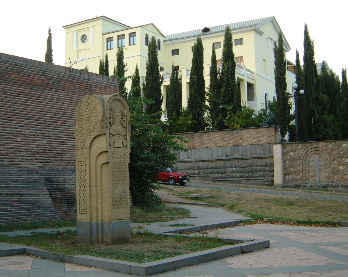 Tbilisi |
NON-MANDATORY
COURSE MATERIALS
|
|||||||||||||||||||||||||||||||||||||||||||||||||||||||||||||||||||||||||||||
| |
||||||||||||||||||||||||||||||||||||||||||||||||||||||||||||||||||||||||||||||