| STOL | AR | NA | S |
| Chair | Plural | Definite | Genitive |
Languages vary considerably in their degree of word's complexity. Some languages are characterized by very simple structure of words. In other languages the other extreme is common. Many of the Caucasian languages, including Georgian, are also of this type. For instance, verbs exhibit great complexity, corresponding in meaning to a whole clause in other languages.
გადამაფიქრებინებს
gadamapikrebinebs
| gada | m | a | pikr | ebin | eb | s |
| Preverb | 1 object person, singular | Neutral version | think | Causative marker | Thematic suffix | 3 subject person, singular |
A word where the form-meaning
units are easy to segment and identify is said to have agglutinative
structure. There is a one-to-one correspondence between meaning
and form units in the word, as in stolarnas above. But
when we look at another example, for instance, in Russian, we
get a different picture. Here, it is not possible to identify a
form unit that corresponds to dative separately from singular or
plural. Thus, there is no one-to-one correspondence between
meaning and form units in the word. This structural type is
called fusional (or flective).
| stol-u | table-Dative+Singular | to a/the table |
| stol-am | table-Dative+Plural | to the tables |
Agglutination and fusion are often
presented in one and the same language.
Before we turn to Georgian morphology, it is useful to mention a
few more terms used in morphology.
Root
The lexical morpheme that
may not be segmented into further subparts is called the root.
Stem
A new word formed from a
root is referred to as a stem.
Affixes
Morphological elements
added before the root are prefixes, whereas elements
added after the root are called suffixes. Pairs of
elements called circumfixes are added before and after
the root. A term that covers all these elements is affixes,
including prefixes, suffixes and circumfixes.
Morphemes
A term that covers all these
elements (including roots, stems, prefixes, suffixes,
circumfixes) is morphemes.
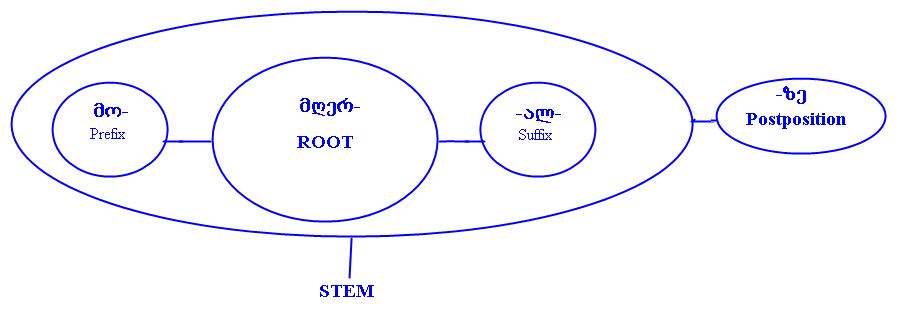
For example, the word მომღერალზე
momgheralze (about a singer) is formed
like this:
The stem მო-მღერ-ალ-
mo-mgher-al- (a
singer) + the suffix -ზე ze- (on, about). The root is მღერ
sing, the prefix მო- (mo-) and the suffix -ალ (-al) make a circumfix mo- ----- -al, expressing
approximately the same meaning as the English -er (sing-er). The suffix -ზე -ze has the same function as the
prepositions on, about
in English:
Note: Please, note, this part is a general overview of the Georgian language. Students are not supposed to have mastered all this information already after this introductory part. This overview is presented in the beginning of the course in order to give students a general idea about the Georgian language system because we believe that to have an idea about the whole system can make it easier to study the details and different parts of this system. Every subject that is touched upon in this part will be more fully described in the following lectures.General information about parts of speech and their morphology in Georgian Inflection and derivation
General
information about parts of speech and their morphology in
Georgian
Nominal morphology is very simple:
An
example of declension is given below.
The case endings are
added to the unchanged part: კაც-ის k'ac-is
man-Genitive (of a/the man). The plural is marked by inserting
the suffix -ებ -eb before the case marker:
კაც-ებ- is k'ac-eb-is
"man-Plural-Genitive, of the men".
| კაც- | ებ- | -ის |
| k'ac- | eb- | -is |
| man- | Plural marker | -Genitive case marker |
კაცი k'aci man
|
|
|
|
|
|
| Nominative | კაც-ი | კაც-ებ-ი | k'ac-i | k'ac-eb-i |
| Ergative | კაც-მა | კაც-ებ-მა | k'ac-ma | k'ac-eb-ma |
| Dative | კაც-ს | კაც-ებ-ს | k'ac-s | k'ac-eb-s |
| Genitive | კაც-ის | კაც-ებ-ის | k'ac-is | k'ac-eb-is |
| Instrumental | კაც-ით | კაც-ებ-ით | k'ac-it | k'ac-eb-it |
| Adverbial | კაც-ად | კაც-ებ-ად | k'ac-ad | k'ac-eb-ad |
| Vocative | კაც-ო | კაც-ებ-ო | k'ac-o | k'ac-eb-o |
| კაცი წერს
k'ac-i c'ers
A/the man
writes. კაცმა დაწერა k'ac-ma dac'era A/the man wrote (/has written). კაცს დაუწერია k'ac-s dauc'eria Apparently, a/the man has written. |
In the table below we see that the verbs change depending on the person and number of the subject. For instance, the form v-wer v-c'er indicates that the subject is first person singular, "I write", whereas the form wer-en c'er-en is used when the subject is third person plural, "they write". The root of the verb is wer c'er.
Listen to the recording:
| SING
1 pers |
მე ვ-წერ |
me v-c'er | I write / I am writing |
| 2 pers | შენ წერ |
shen c'er | you write |
| 3 pers | ის წერ-ს |
is c'er-s | he writes |
| PLUR
1 pers |
ჩვენ ვ-წერ-თ |
chven v-c'er-t | we write |
| 2 pers | თქვენ წერ-თ |
tkven c'er-t | you write |
| 3 pers | ისინი წერ-ენ |
isini c'er-en | they write |
Conjugation of the verb to be
| მე ვარ me v-ar |
I am |
| შენ ხარ shen x-ar |
You are |
| ის არის is ari-s |
he/she is |
| ჩვენ ვართ chven vart |
we are |
| თქვენ ხართ tkven xart |
you are |
| ისინი არიან isini ari-an |
they are |
An interesting feature of Georgian verbs is that not only the identity of the subject is reflected in the form, but also the person and number of objects may be marked.. Georgian has a rich system of tense, aspect and mood forms. We will return to these issues later on in the course.
Adverbs
Adverbs are words
that express time, place, manner, reason, purpose etc, e. g. and
modify the verb or the circumstances of the clause. They modify
adjectives and other adverbs as well (as they do in English):
a) time: დღეს dghes "today", გუშინ gushin "yesterday", შარშან sharshan "last year", მაშინ mashin "then", ადრე adre "early" etc.
b) place: აქ ak "here", იქ ik "there", ზევით zevit "up", ქვევით kvevit "down" etc.
c) manner: ნელა nela "slowly", სწრაფად sc'rapad "quickly", ძალიან dzalian "very much", etc.
Postpositions
Postpositions correspond
in function to prepositions, but differ from prepositions in
being placed after the noun or noun phrase. Compare the phrases:
| after | the war |
| Preposition | Noun |
| ომის
omis |
შემდეგ
shemdeg |
| the war | after |
| Noun | Postposition |
| მაგიდა | მაგიდა-ზე |
| magida | magida-ze |
| table | table-on |
| "table" | "on the table" |
Conjunctions
Conjunctions are words
that join other words, phrases or sentences, e. g.:
(1) connecting words (და da
"and" is the conjunction in this sentence):
| ნანა | და | ნათელა | ქართულ | ენას | სწავლობენ |
| nana | da | natela | kartul | ena-s | sc'avloben |
| nana | and | natela | Georgian | language-Dat. | study |
(2) connecting sentences:
ნინოს წასვლა უნდოდა, მაგრამ
დედამ არ წაიყვანა.
Ninos c'asvla undoda, magram dedam ar
c'aiq'vana.
"Nino wanted to go but
mother did not take her with her"
Listen:
| ნინოს | წასვლა | უნდოდა | მაგრამ | დედამ | არ | წაიყვანა |
| nino-s | c'asvla | undoda | magram | deda-m | ar | c'aiq'vana |
| Nino-Dative | to go.
Nominative |
wanted | but | mother-Ergative | not | took
her with her |
Particles have various functions, for instance of emphasis. They are added to the nouns either before or after the case marker.
Particle before the case marker:
| ორ | ი | ვე | მ |
| or | i | ve | m |
| two | Nominative case marker by origin but since it is followed by the particle and then by the case marker, it belongs to the stem | all, together (particle) | Ergative case |
Particle after the case marker:
| ზღვა | ს | ა | ც |
| zgva | s | a | c |
| sea | Dative case | (so called emphatic vowel) | too, also (particle) |
If the case marker is followed by a postposition, the particle is found in the final position, after the postposition. The sequence looks like this: stem-case marker-postposition-particle, e. g.:
ზღვა-ს-თანა-ც zgva-s-tana-c
| ზღვა | ს | თანა | ც |
| zgva | s | tana | c |
| sea | Dative case | at, near (postposition) | too, also (particle) |
Interjections
Interjections are forms
that express feelings, such as anger, surprise, etc., like: აჰ
ah, ოჰ oh etc.
After this brief review of
the morphology of different parts of speech in Georgian, we turn
to the general morphological processes in Georgian.
Both nominals and verbs are able to produce new grammatical and lexical forms, e.g. verbs produce different forms for different persons and tenses, nouns are declined in different case forms, new verbs may be formed from nouns or verbs, new nouns from nouns, adjectives or verbs etc.
In inflection a form changes, while the lexical meaning of the word is the same:
| კაც-ი | კაც-ს |
| k'ac-i | k'ac-s |
| man-Nominative case | man-Dative case |
| "man" Nominative | "man" Dative |
In derivation the form of a word changes and a new word is produced. The lexical, but not the grammatical, meaning of the word is changed:
| კაც-ი | სა-კაც-ე |
| k'ac-i | sa-k'ac-e |
| man-Nominative case | for-man-stem producing suffix.Nom. |
| "man" Nominative | "stretcher" Nominative |
More information -
non-obligatory (additional) information:
Agglutination and fusion